MiCA, EUDI & EBSI: The Future of Trusted Crypto
Discover how MiCA, EUDI wallets and EBSI ledgers combine to enable compliant, trusted crypto transfers with strong digital identity and legal certainty across t
Discover how MiCA, EUDI wallets and EBSI ledgers combine to enable compliant, trusted crypto transfers with strong digital identity and legal certainty across t
Crypto adoption will not scale on technology alone; it needs the same sense of confidence people expect from online banking. When users send digital assets, they should know who they are interacting with, whether the transaction is compliant, and how disputes or audits can be handled. Bank-grade trust in crypto means combining strong digital identity, verified counterparties, and reliable transaction records without removing the speed and openness that make blockchain valuable. For businesses, this could mean onboarding customers faster, processing compliant crypto payments, and reducing fraud exposure. For everyday users, it creates a safer experience where crypto wallets feel less anonymous and more accountable.
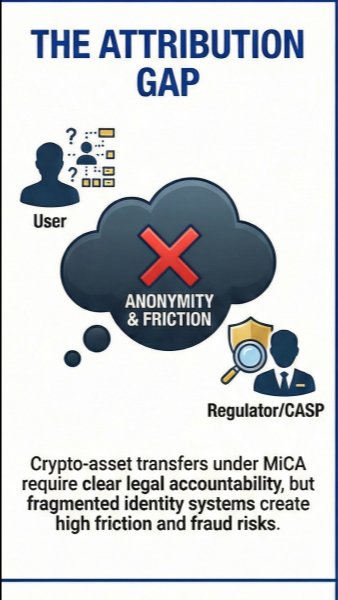
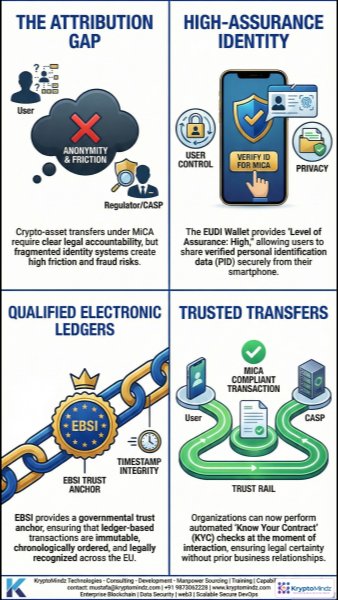
MiCA raises the bar for crypto compliance by requiring clearer accountability across digital asset transfers. The challenge is that many current crypto identity systems are fragmented, with wallet addresses, exchange accounts, and user data often sitting in disconnected environments. This attribution gap makes it difficult to prove who is behind a transaction, especially when funds move across platforms or jurisdictions. For regulators, it creates blind spots; for crypto service providers, it increases compliance costs and fraud risk. A stronger identity layer can help connect transactions to verified users in a privacy-conscious and legally reliable way.
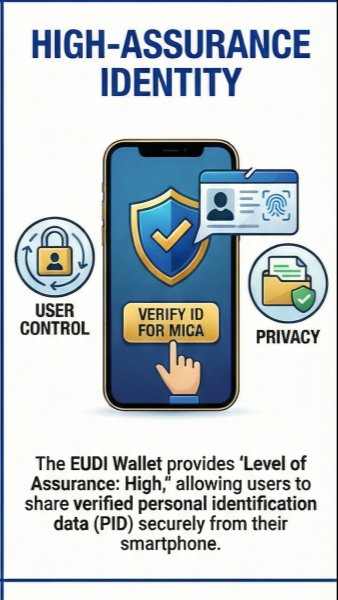
EUDI wallets offer a practical way to bring high-assurance digital identity into crypto and MiCA compliance workflows. Instead of repeatedly uploading passports or utility bills, users can share verified credentials directly from their phone when needed. This makes onboarding faster for crypto exchanges, custodians, and payment providers while giving users more control over what personal data they disclose. For example, a user could prove they are a verified EU resident or meet a specific compliance requirement without exposing unnecessary information. By combining trusted identity with selective disclosure, EUDI wallets can support safer crypto transactions without sacrificing privacy.
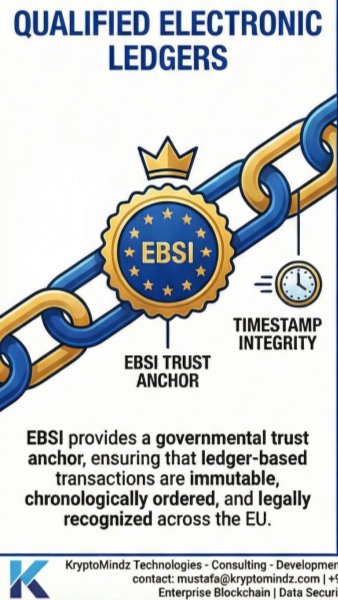
EBSI and qualified electronic ledgers can give blockchain data a stronger legal foundation across the European Union. By anchoring records in trusted infrastructure, organizations can create immutable, timestamped, and verifiable transaction histories that stand up to audits. This is especially valuable for crypto asset service providers that need to demonstrate compliance with MiCA, anti-fraud controls, or customer due diligence requirements. A compliant ledger record can help prove what happened, when it happened, and which verified parties were involved. In practice, this turns blockchain activity from raw technical data into evidence that regulators, auditors, and business partners can trust.
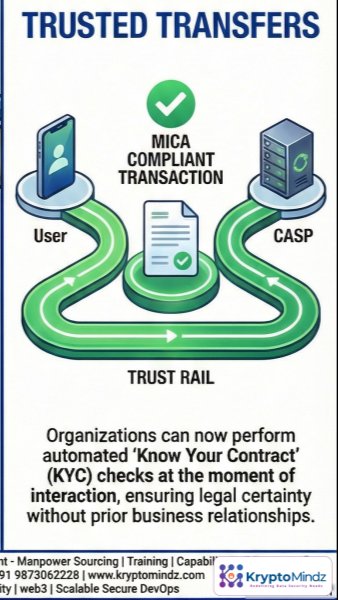
When verified identity, trusted ledgers, and automated compliance checks work together, crypto transfers can become both instant and MiCA-compliant. Instead of relying on slow manual reviews, systems can evaluate identity credentials, transaction rules, and counterparty risk at the moment of interaction. This enables a practical ‘Know Your Contract’ model, where legal certainty is established dynamically before value moves. For example, a crypto payment provider could verify a customer’s credentials, screen the transaction, and record compliant evidence in seconds. The result is a faster, safer workflow that supports real-time digital asset transfers without weakening regulatory controls.
Follow the hub for MiCA, stablecoins, RWA regulation, CASP controls and related training resources.
Related Service RWA & Crypto Compliance StrategyPlan regulated token, stablecoin and RWA programs with governance, risk controls and security reviews.
Implementation Use Case Web3 RWA Compliance OperationsSee how teams can coordinate token workflows, compliance evidence and exceptions across regulated asset operations.
Recommended Course Real-World Assets & TokenizationBuild practical fluency in tokenized assets, settlement models, custody, risk and regulatory operating models.
YouTube Playlist Stablecoin & RWA Regulation BriefingWatch the playlist on CLARITY, GENIUS, STABLE Acts, MiCA comparisons and RWA strategy.
Book a Discovery Call Map This to Your RoadmapDiscuss how this topic applies to your product, compliance posture, architecture or delivery plan.
Editorial trust
Each KryptoMindz article is reviewed against current enterprise AI, blockchain, digital identity and compliance practices before publication or major updates.
Founder-led perspective from KryptoMindz Technologies, focused on secure AI adoption, Web3 risk, digital identity and enterprise trust architecture.
LinkedIn profileResearch, engineering and advisory work across AI Agents, Enterprise Blockchain, Digital Identity and Digital Trust Engineering.
YouTube channelDiscover more insights and resources on our platform.
Visit Kryptomindz